
Soccer Opponent Analysis: How to Do It
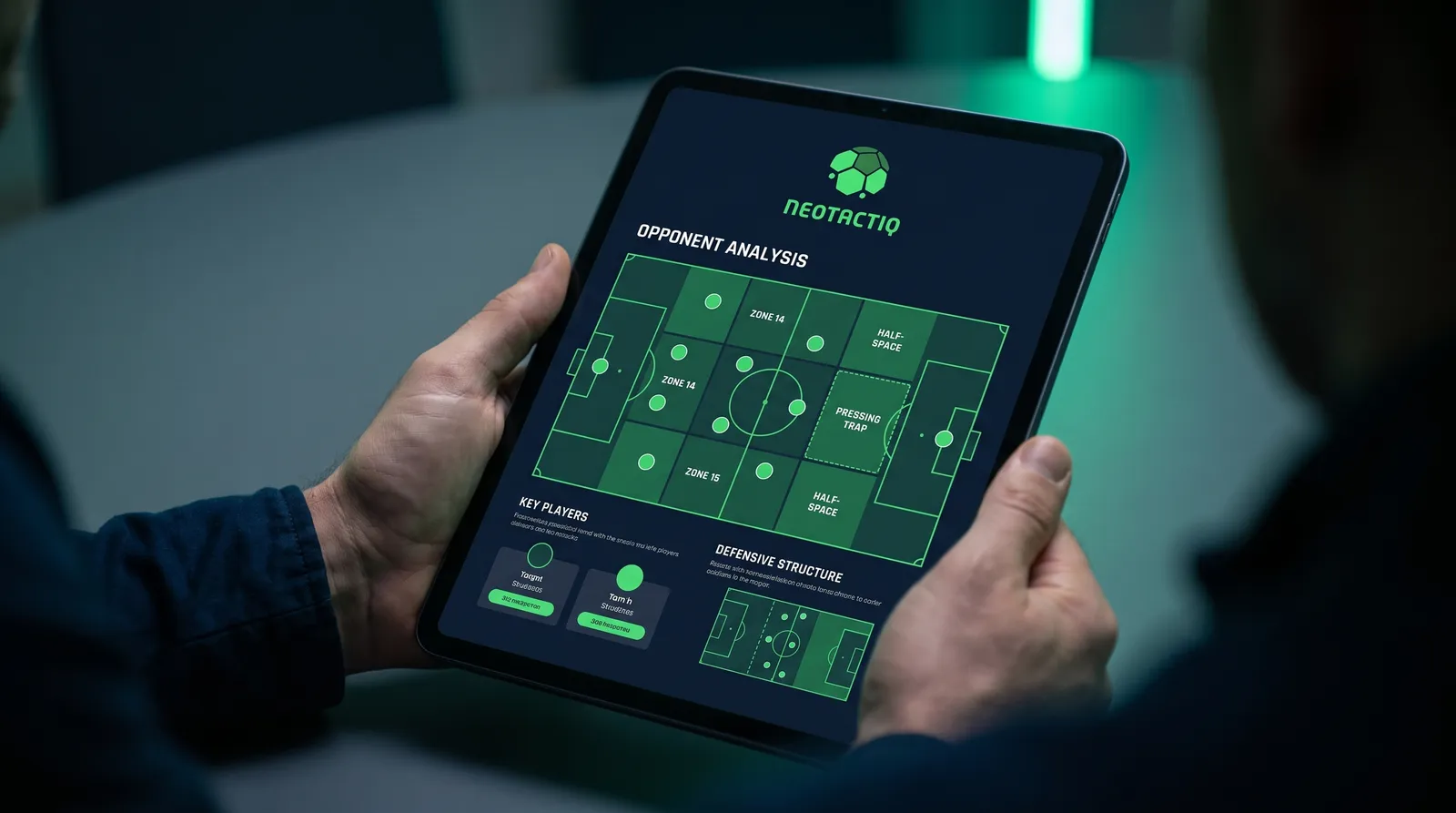
Most grassroots coaches prepare for the week's match thinking only about their own team. Spending even half an hour analysing the opponent radically changes the quality of the tactical decisions made before kickoff.
What information to gather before the match
You don't need an exhaustive report: knowing the opponent's usual system, their build-up pattern, their most influential player, and how they typically defend set pieces is already enough to prepare a reasoned match plan instead of a generic one.
How to study opponent match footage
If you have access to footage of the opponent's previous matches — even if it's filmed on a phone by another team — you don't need to watch the whole thing: reviewing their last two or three build-up sequences, their corners for and against, and a couple of defensive transitions already reveals the most repeatable patterns.
Playing patterns you need to spot
The most useful patterns to identify are the ones that repeat regardless of the score: where the opponent tends to build out when under pressure, which flank they attack more often, and what their backline does when they lose the ball in the opponent's half.
From analysis to a usable match report
Opponent analysis becomes more valuable when it's cross-referenced with your own data: if your match statistics tell you which phases you're strongest in, you can decide with real judgement whether to exploit the pattern spotted in the opponent, or simply avoid it.

Written by
Mario Fernández Osorio
Level III coach with 7+ years in Madrid grassroots football. Former analyst at Getafe C.F. and specialist in sports technology.
View full profile →