
Soccer Player Wellbeing App: What to Look For
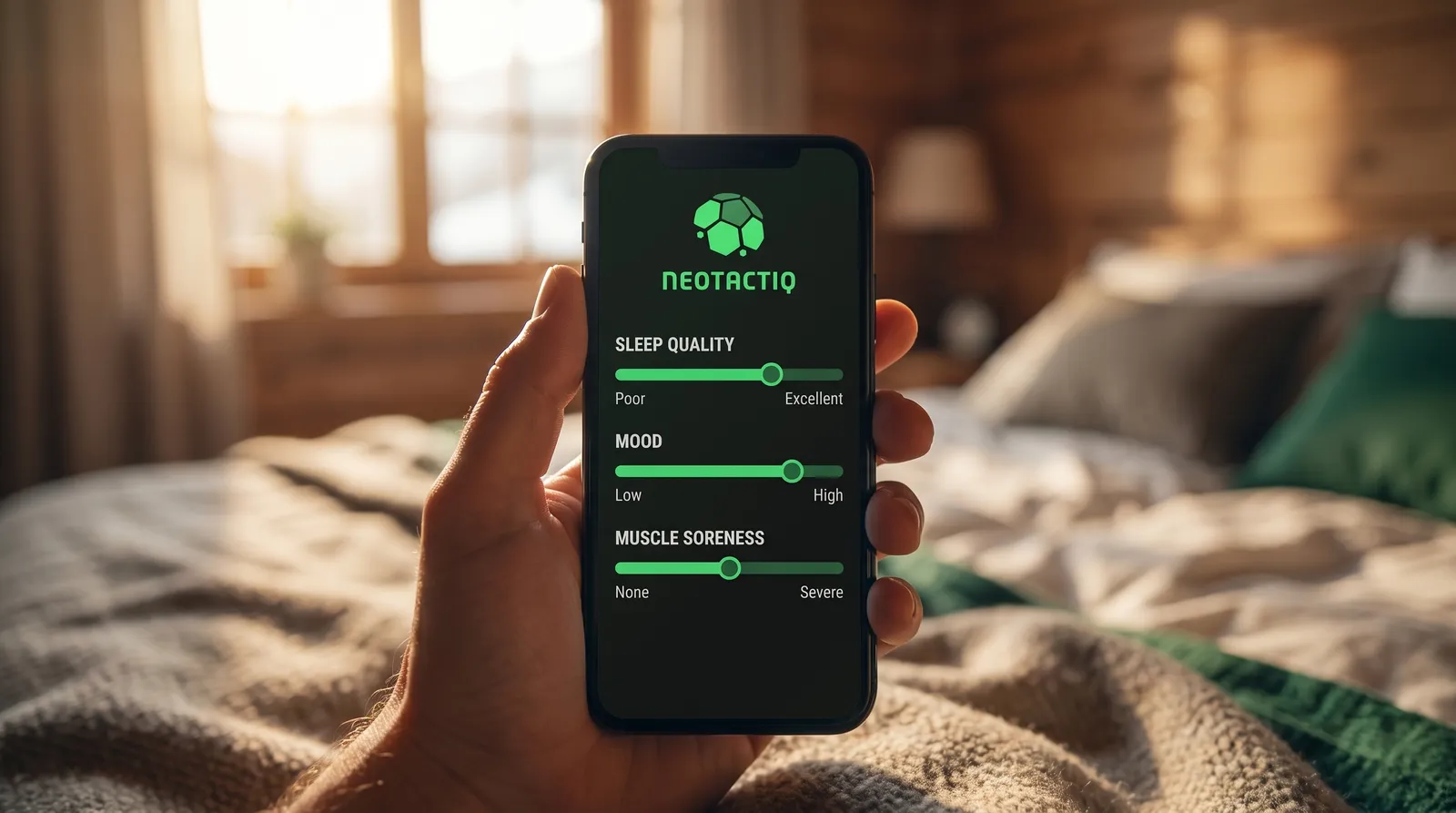
A player can look like they're training "fine" on paper — reasonable minutes, sensible load — and still be edging toward overtraining if nobody asks how they're sleeping, how they feel, or how they're handling stress off the pitch.
What player wellbeing means and why it matters
Player wellbeing is the subjective layer that complements objective load: how they sleep, how they perceive their fatigue, their mood and their general stress level. Two players with the same training load can respond very differently depending on that subjective layer, especially at youth levels where academic and social stress also weighs in.
Wellbeing questionnaires: sleep, fatigue, mood
An effective wellbeing questionnaire needs no more than four or five questions scored one to five: sleep quality, overall fatigue level, muscle soreness, mood and stress level. It takes under a minute to fill in and, applied consistently, reveals trends a one-off conversation wouldn't catch.
Spotting overtraining before it happens
The warning sign usually isn't one bad data point on a single day, but a sustained trend: several days in a row of worse-than-usual sleep, rising perceived fatigue with no change in training load, or a mood dip that coincides with worse session performance. Catching it before the injury is exactly the point of tracking player wellbeing as a practice.
Wellbeing tools and apps compared
Dedicated sports wellbeing apps exist, but for a grassroots or amateur team, the most practical approach is usually a short questionnaire built into the same platform where team activity is already recorded, rather than an extra tool players have to learn and inevitably forget to fill in.
Building wellbeing checks into your team routine
Wellbeing works best as a habit, not an exception: ask it every time a player arrives at training, not just when something is already wrong. Over time, the history itself lets you compare each player's usual response and spot real deviations, not just one off day.
Written by
Mario Fernández Osorio
Level III coach with 7+ years in Madrid grassroots football. Former analyst at Getafe C.F. and specialist in sports technology.
View full profile →