
How to Analyze Soccer Pressing
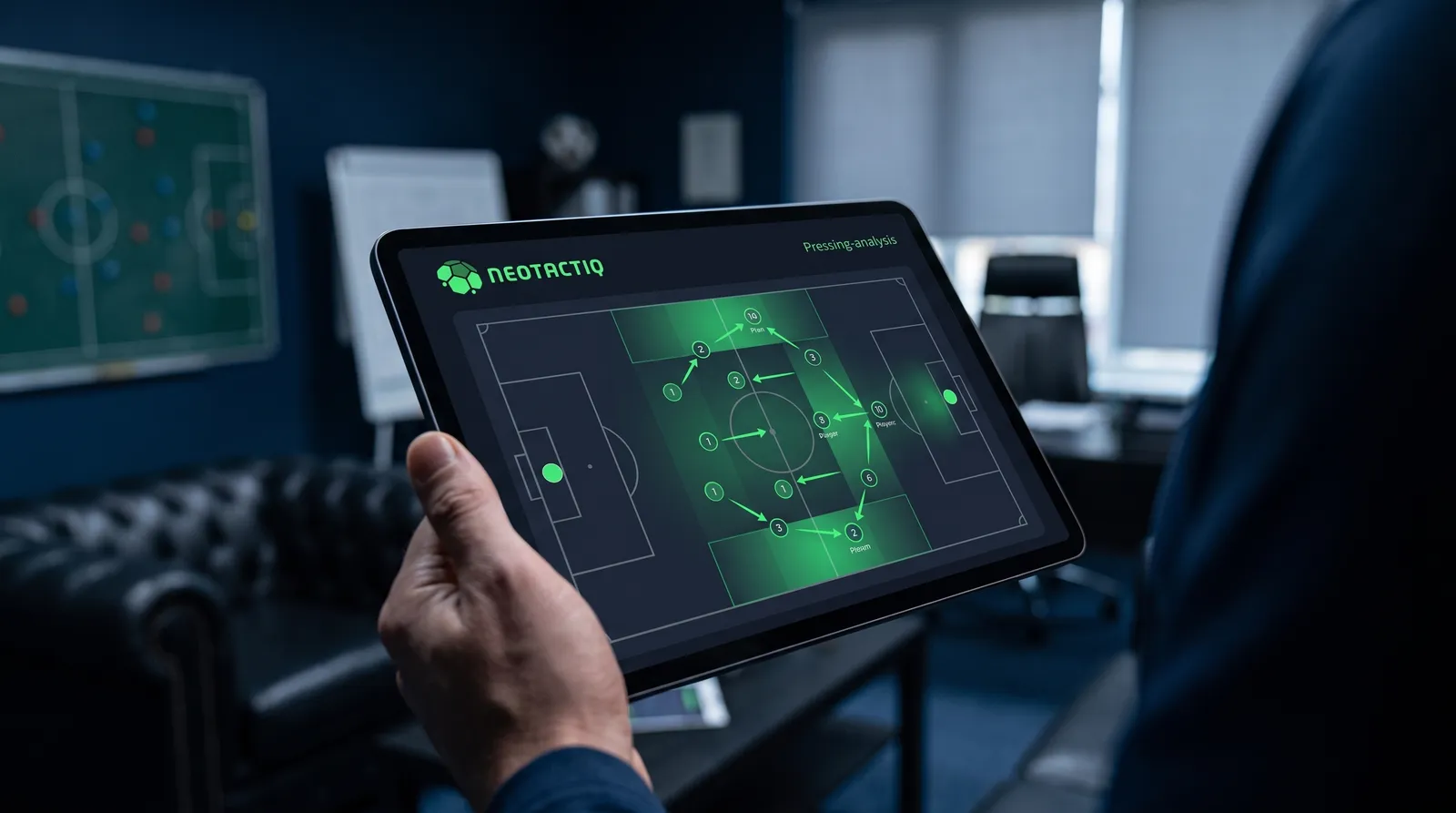
Almost every team trains pressing. Very few analyse afterwards whether that pressing actually wins the ball back in zones dangerous for the opponent, or whether it just physically wears the team out without translating into anything concrete.
What pressing is and its variants
Pressing is organised, coordinated pressure on the opponent when they have the ball, aimed at forcing an error or winning it back in a specific zone. The most common variants are high pressing (near the opponent's box), mid-block pressing (from the halfway line) and low-block pressing (ceding ground to win the ball back near your own box).
Metrics that show whether pressing is working
Three simple metrics let you evaluate pressing without advanced technology: number of recoveries in the opponent's half per match, number of turnovers forced by direct pressure, and chances or minutes generated in the first ten seconds after the recovery — connecting directly to transition analysis.
How to log pressing from match video
If you have match footage, you don't need to log every single pressing action: it's enough to mark the minute of each recovery in the opponent's half and classify it as "direct pressure" or "unforced opponent error" to start distinguishing how much of the pressing is actually effective.
Common mistakes when analyzing pressing
The most common mistake is measuring only effort — how often the team presses — without measuring outcome — how many of those presses end in an actual recovery. A team can look very intense while pressing and still have a very low effective recovery rate.

Written by
Mario Fernández Osorio
Level III coach with 7+ years in Madrid grassroots football. Former analyst at Getafe C.F. and specialist in sports technology.
View full profile →