
The KPIs every sporting director must track in their football club
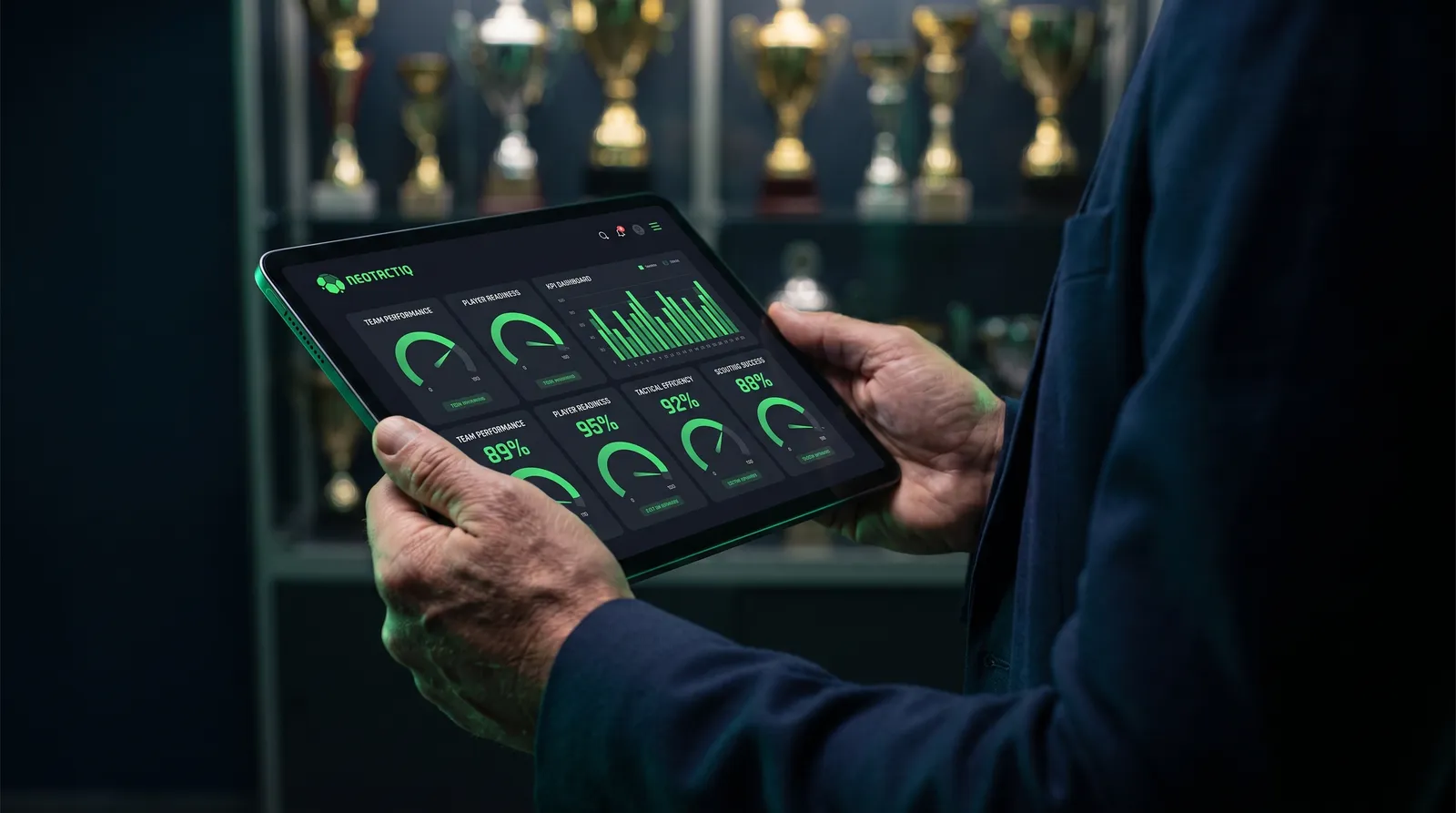
The sporting director of a football club faces an information problem. It is not that data is lacking: there is an excess of data without context and a shortage of meaningful metrics. Measuring many things is not the same as measuring well. And measuring well is not the same as acting correctly on what is measured.
In this article we review the KPIs that truly matter for a sporting director, organised by management area.
Sports performance KPIs
These indicators reflect the state of the sporting project and allow evaluation of whether the methodology is working:
- Player progression rate: percentage of players who move up a category or receive a higher-level offer in a given period.
- Minutes by position and category: distribution of playing time. Detects inequalities or lack of rotation that may affect development.
- Training attendance rate: indicator of commitment and group health. A sustained decline is a warning signal.
- Performance by microcycle: comparison of results based on the type of training week. Identifies correlations between workload and performance.
Development and methodology KPIs
Harder to measure but equally important for clubs with a development focus:
- Methodological consistency across teams: assessment of whether all coaches apply the same playing principles. Can be measured through systematic observations.
- Coaching staff training hours: number of hours of training and CPD for coaches. A club that does not develop its coaches cannot expect to improve its methodology.
- Identified talent retention: percentage of scouted players who remain at the club for more than two seasons.
Scouting and recruitment KPIs
- Trial conversion rate: percentage of players who trial and join the club. Measures recruitment process efficiency.
- Average assessment time: days from when a player is identified to when a decision is made. The lower, the more agile the process.
- Recruitment sources: where players come from (tournaments, own schools, referrals). Allows optimisation of recruitment investment.
Management and administration KPIs
- Voluntary churn rate: percentage of players who do not renew. If high, there is a satisfaction problem that may be sporting, relational, or financial.
- Cost per team vs. sporting results: spending efficiency. It is not about spending less, but spending wisely.
- Fee non-payment rate: indicator of families' financial health and payment management effectiveness.
How to start measuring from scratch
The most common mistake is trying to implement all these KPIs at once. The recommendation is to choose three or four indicators from the club's most critical area, measure them systematically over a full season, and make decisions based on them. Once that process is stable, add more layers.
What is not measured cannot be improved. But what is measured without acting on it is noise that consumes time without generating value.
Written by
Mario Fernández Osorio
Level III coach with 7+ years in Madrid grassroots football. Former analyst at Getafe C.F. and specialist in sports technology.
View full profile →