
Sports coordination: how to align all your club's teams around a shared playing philosophy
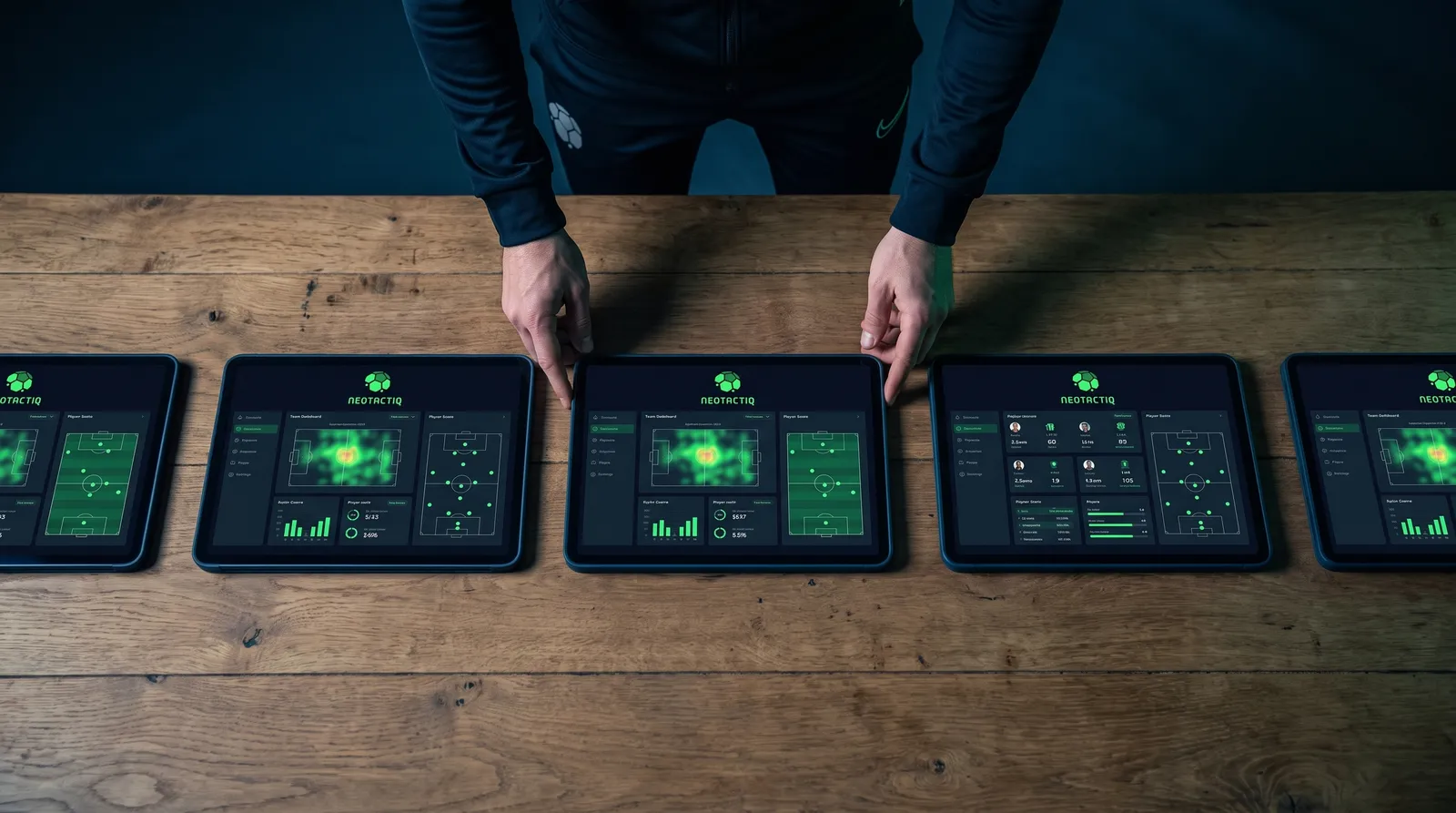
A football club with eight teams and no real coordination is, in practice, eight independent projects sharing a badge and colours. Each coach works with their own methodology, their preferred exercises, and their idea of how football should be played. The player moving up a category encounters a completely different model. The sporting director has no idea whether what is being worked on in the youth categories has any continuity with what is demanded by the first team.
Sports coordination exists to solve precisely this problem.
What sports coordination is and what it is not
Sports coordination is not uniformity. It is not about every team playing the same way, using the same system, or performing the same exercises. It is about every team sharing the same playing philosophy, non-negotiable principles, and a common methodological language that facilitates communication and player progression between categories.
A player moving from U12 to U14 should not have to learn from scratch what "pressing after loss" or "positional superiority" means. If the playing model is consistent, they already know. They just need to apply it in a more physically and tactically demanding context.
The club's playing model: the document that changes everything
The first step in any sports coordination process is to create — or review — the club's playing model. This document answers fundamental questions:
- How do we want to attack? What behaviours are desirable in the offensive phase?
- How do we want to defend? What defensive principles are non-negotiable?
- How do we want to transition? What do we do when winning or losing the ball?
- What player profile does our model require?
- How does the model adapt according to age and development level?
This document should not be a hundred-page academic text. It should be a practical guide, with visual examples, that any coach can read, understand, and apply in their daily work.
How to implement the model throughout the structure
Having the document is not enough. Implementation requires several simultaneous actions:
- Coaching staff development: all coaches must know the model and how to apply it to their category. This requires regular meetings, internal training, and mutual observation.
- Supervision and feedback: the coordinator must observe sessions and matches from all teams regularly. Not to judge, but to accompany and align.
- Horizontal communication: coaches of adjacent categories must talk to each other. The U14 coach needs to know what the U12 coach is working on to understand what players will arrive and in what condition.
Tools for coordination
Sports coordination requires fluid communication between the coordinator and coaches, shared access to the season plan and methodological materials, and a monitoring system that allows the status of each team to be seen at a glance. A management platform that centralises this information makes the coordinator more effective and makes coaches feel better supported.
Conclusion
Sports coordination is the difference between a club and a collection of teams. It is not built in a meeting or in a single season: it is a continuous process of alignment, communication, and improvement. Clubs that do it well do not just develop better players: they build an identity that players, families, and the community recognise and value.
Written by
Mario Fernández Osorio
Level III coach with 7+ years in Madrid grassroots football. Former analyst at Getafe C.F. and specialist in sports technology.
View full profile →